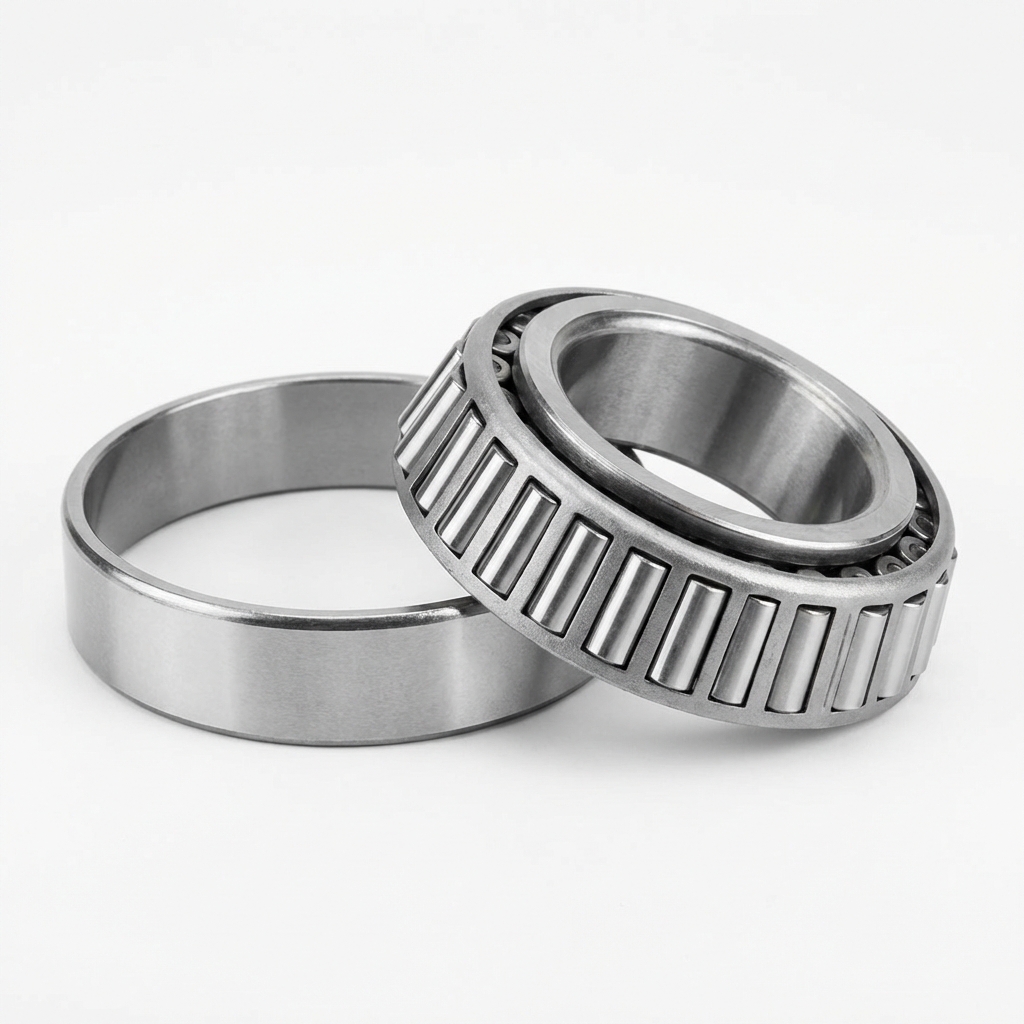
The TIMKEN NP 315658 is a high-performance unitized tapered roller bearing designed specifically for demanding industrial applications requiring exceptional rigidity and load handling capabilities. This bearing features geometry optimized to manage simultaneous high radial and thrust (axial) loads, a common requirement in heavily loaded gearboxes, differentials, and industrial pinion assemblies. Manufactured using high-quality case-hardened bearing steel (typically SAE 52100 equivalent or proprietary alloys), the NP 315658 ensures superior fatigue life and resistance to wear, even under conditions of boundary lubrication or slight misalignment. Its precise roller profile minimizes stress concentration at the roller ends, resulting in predictable performance and reduced operational noise.
Selecting the TIMKEN NP 315658 guarantees maximum operational uptime and a reduced total cost of ownership (TCO) compared to standard commercial-grade bearings. Its robust design is engineered for rapid installation and long service intervals in critical machinery, providing significant competitive advantages in maintenance scheduling. Ideal for heavy-duty applications in mining, construction, and power transmission sectors, this unit delivers the precision engineering synonymous with the TIMKEN brand, ensuring reliable, temperature-stable operation across a wide range of operating speeds and environments. Upgrade to TIMKEN precision for unparalleled reliability in your heaviest machinery.
Key Features
Optimized Roller Geometry: Minimizes edge stresses and friction for prolonged operational life.
High Radial and Axial Load Capacity: Engineered to manage combined high loads simultaneously in rugged applications.
Case-Hardened Steel: Provides exceptional hardness on the surface and toughness in the core, maximizing resistance to impact and wear.
Dimensional Consistency: Meets stringent ABMA and ISO standards, ensuring ease of installation and interchangeability.
Reduced Maintenance Cycle: TIMKEN precision engineering leads to extended service intervals and lower overall operational costs (TCO).