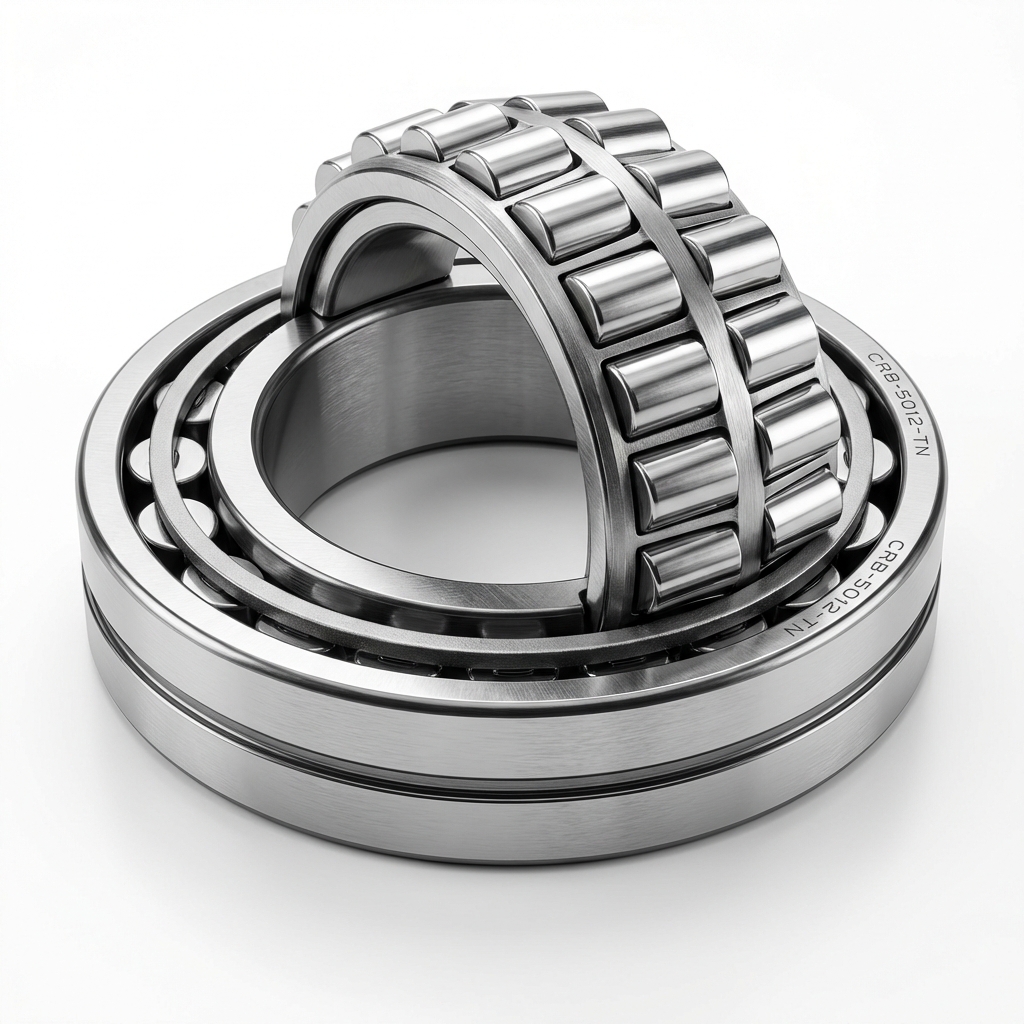
SW NJ 1006 Cylindrical Roller Bearing - Single Row (30x55x13 mm) - High Radial Load
The SW NJ 1006 single-row cylindrical roller bearing is engineered for demanding industrial applications requiring exceptionally high radial load capacity combined with medium-high speed capabilities. This specific NJ design features an L-shaped rib on the inner ring and two fixed ribs on the outer ring, allowing for axial location and guidance in one direction while accommodating thermal expansion in the other. Precision-machined rollers and raceways ensure optimal load distribution, minimizing stress peaks and reducing friction, leading to cooler running temperatures and extended service life. The separable design of the cylindrical roller series facilitates easier mounting and dismounting procedures, simplifying maintenance cycles, especially in complex machinery installations.
Built to SW's stringent quality standards, the NJ 1006 is manufactured using high-quality bearing steel, providing superior hardness and fatigue resistance essential for continuous operation in harsh environments like heavy-duty gearboxes, industrial pumps, and rolling mills. Choosing the SW NJ 1006 means investing in reliability and performance stability, significantly reducing unplanned downtime. Its robust construction makes it an ideal upgrade or replacement component where standard deep groove ball bearings cannot handle the intense radial forces inherent in heavy machinery operation. Specify SW for dependable, long-term performance under continuous static and dynamic loading.
Key Features
Exceptional capacity for high radial loads due to optimized line contact between rollers and raceways.
Separable components (inner and outer rings) facilitate easier installation, inspection, and maintenance.
Precision-machined raceways reduce operational noise and enhance running accuracy.
Designed for reliable performance in high-vibration and demanding industrial applications (gearboxes, power transmission).
NJ configuration provides axial location guidance in one direction while accommodating axial displacement resulting from thermal expansion.